


A cold is a viral infection that usually lasts 7–10 days and may include congestion, sore throat, cough, and mild fatigue.
Seasonal allergies occur when the immune system reacts to environmental triggers like pollen or mold. Symptoms often include sneezing, itchy eyes, and a clear runny nose, and they can last for weeks.
A sinus infection happens when the sinus cavities become inflamed and blocked, often after a cold or severe allergies. Symptoms commonly include facial pressure, thick nasal mucus, headache, and symptoms lasting longer than 10 days.
During spring in the Houston area, changing weather patterns and high pollen levels can make it difficult to tell whether symptoms are caused by allergies, a cold, or a developing sinus infection. Persistent congestion, facial pressure, or worsening symptoms should not be ignored, especially when symptoms interfere with breathing, sleep, or daily activities.
For pollen and mold reports visit Houston Health Department
Understanding the differences can help you decide whether your symptoms can be managed at home or if it’s time to seek medical care.
Below is a simple guide to help you recognize the key differences.
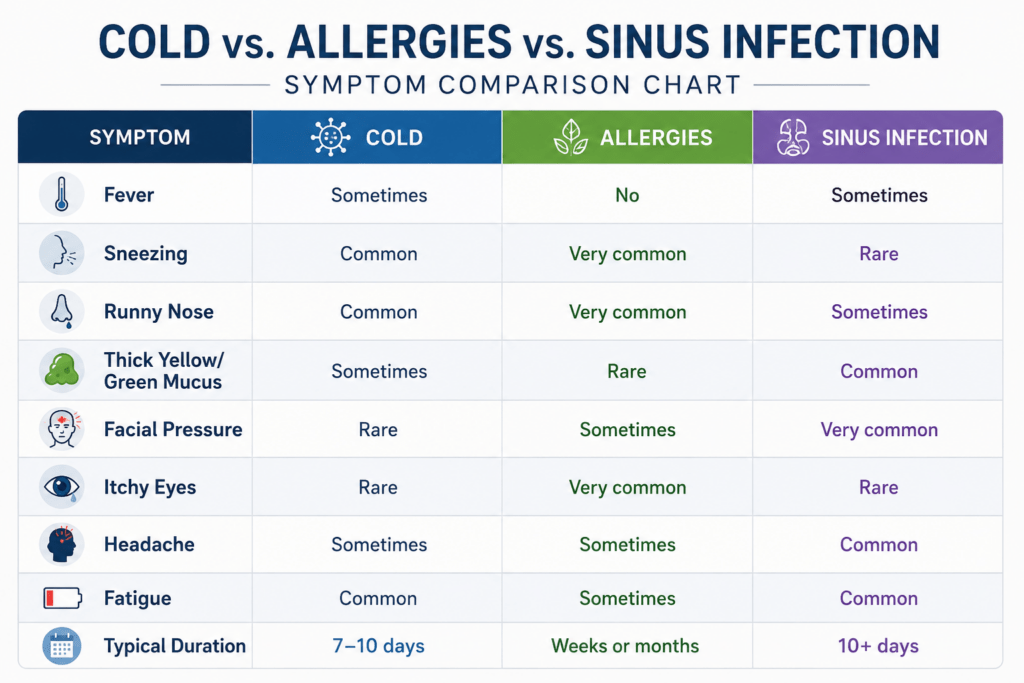
While these symptoms can overlap, a few key differences can help point to the most likely cause.
How Do You Know If It’s a Cold?
A cold is a viral respiratory infection that usually develops gradually. Symptoms often start with a scratchy throat or mild fatigue and progress to congestion, coughing, and a runny nose.
Common cold symptoms include:
- Runny or stuff nose
- Sore throad
- Sneezing
- Mild cough
- Fatigue
- Low-grade fever in some cases
Most colds improve within 7 to 10 days with rest, hydration, and over-the-counter medications.
However, if symptoms become severe or last longer than expected, another condition such as a sinus infection may be developing.
If your breathing becomes difficult or symptoms escalate, contact Family First ER immediately — our emergency physicians are available 24/7 with on-site imaging and rapid respiratory treatment.
What Are the Signs of Seasonal Allergies?
Seasonal allergies occur when the immune system reacts to environmental triggers such as pollen, grass, or mold spores. In areas like Texas, allergy season can start early and last for months.
Unlike colds, allergies are not caused by a virus and do not cause fever.
Common allergy symptoms include:
- Frequent sneezing
- Itchy or watery eyes
- Clear runny nose
- Nasal congestion
- Postnasal drip
- Symptoms that persist for weeks
Another key difference is that allergy symptoms often appear quickly after exposure to triggers such as spending time outdoors.
When Is It Likely a Sinus Infection?
A sinus infection, also called sinusitis, occurs when the sinus cavities become inflamed and blocked, allowing bacteria to grow. Sinus infections often develop after a cold or severe allergies.
Signs that symptoms may be related to a sinus infection include:
- Facial pressure or pain, especially around the forehead, eyes, or cheeks
- Thick yellow or green nasal mucus
- Headache or pressure that worsens when bending forward
- Fever
- Congestion that does not improve
- Symptoms lasting more than 10 days
When Should You Seek Medical Care?
While many colds and allergy symptoms can be managed at home, some symptoms should be evaluated by a medical professional.
You should seek medical care if you experience:
At Family First ER, our physicians can quickly evaluate respiratory symptoms and determine whether your illness is caused by a cold, allergies, or a sinus infection. With on-site diagnostic capabilities and minimal wait times, patients can receive answers and treatment without the long delays often associated with hospital emergency rooms.24/7 with on-site imaging and rapid respiratory treatment.
Understanding Your Symptoms Helps You Get the Right Care
Colds, allergies, and sinus infections can feel very similar, especially in the early stages. Paying attention to symptom patterns such as fever, facial pressure, and how long symptoms last can help you identify the likely cause.
If your symptoms become severe or you’re unsure what’s causing them, the experienced medical team at Family First ER is available 24/7 to provide fast, compassionate care.
Frequently Asked Questions
Can allergies turn into a sinus infection?
Yes. Allergies can cause inflammation and blockage in the sinus passages. When mucus cannot drain properly, bacteria can grow and lead to a sinus infection.
How long should cold symptoms last?
Most colds improve within 7–10 days. If symptoms last longer than 10 days or worsen after initially improving, it may indicate a sinus infection.
Do allergies cause fever?
No. Allergies do not cause fever. If you have a fever along with congestion or facial pressure, it may be a cold or sinus infection instead.